Lactate test: what it is and how it helps if you run or train
TechNSports Team · · 7 min read
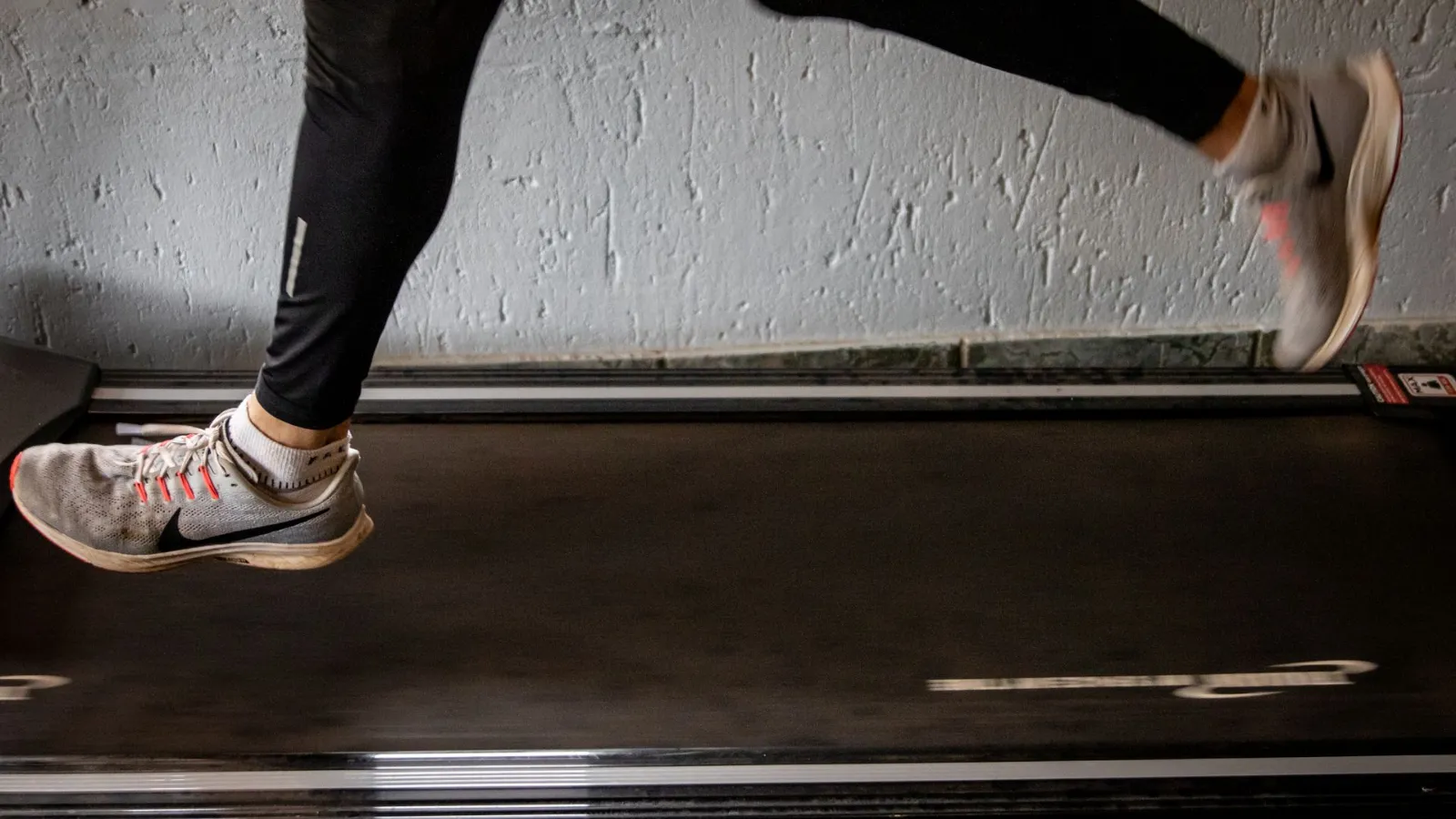
If you run, ride or train consistently, you have very likely heard about lactate. For years it belonged exclusively to high-performance labs, but today anyone who takes their training seriously can measure it. A well-run lactate test answers a question no sports watch can answer precisely: the exact intensity your body should be training at. Your body, not a statistical average. Here we explain what it is, how it works and what you can do with the information.
What is lactate, and why isn’t it your enemy?
Lactate is a fuel your body produces and reuses all the time, not a toxic waste product. The idea that “lactic acid” poisons your muscles was left behind decades ago. Modern research, summarized by physiologist George Brooks in the journal Cell Metabolism (2018), showed that lactate travels between muscles, heart, brain and liver as an energy source and as a signaling molecule. Your muscle fibers produce it even at rest: a healthy person’s blood contains between 0.5 and 2.2 mmol/L of lactate without any exercise (Goodwin et al., Journal of Diabetes Science and Technology, 2007).
The mechanism is easy to understand. When you move gently, your body recycles lactate as fast as it produces it, and the concentration in your blood stays stable. When intensity rises, production starts to outpace your capacity to reuse it, and lactate accumulates. That breaking point isn’t a problem: it’s information. It marks the line between the effort you can sustain for hours and the effort that takes its toll within minutes. By the way, lactate isn’t to blame for next-day muscle soreness either; that soreness comes from mechanical damage to the fibers, not from any buildup.
What does a lactate test involve?
A lactate test is a series of progressively harder stages, on a treadmill or a bike, with small blood samples taken from a fingertip or an earlobe. You start at a comfortable pace, and each stage raises the speed or the power a little. At the end of each stage, a drop of blood is taken and its lactate concentration is measured in a portable analyzer. The specialized literature recommends stages of at least 3 minutes so that lactate reaches a value representative of that intensity (Faude, Kindermann and Meyer, Sports Medicine, 2009).
When you finish, the lactate values are plotted against the pace, power or heart rate of each stage. The result is your lactate curve: a functional X-ray of your metabolism in motion. The full test takes about an hour, doesn’t require going to total exhaustion, and adapts to each person’s level, from someone preparing for a first 10K to cyclists with years of endurance behind them.
What is the lactate threshold, and why does it matter so much?
The lactate threshold is the intensity above which lactate accumulates in the blood faster than your body recycles it. In practice, two reference points are used. The first threshold, called the aerobic threshold, is traditionally associated with concentrations near 2 mmol/L and marks the ceiling of truly easy effort. The second threshold is associated with the classic 4 mmol/L reference, known by its acronym OBLA, and approximates the highest effort you can sustain in a steady state (Faude et al., Sports Medicine, 2009). The physiological gold standard is the maximal lactate steady state, the highest intensity at which the concentration holds without spiking during prolonged effort.
This matters for a very concrete reason: in endurance athletes, lactate thresholds predict race performance better than the famous VO2 max (Faude et al., 2009). Two runners with the same VO2 max can run very different half marathons; the one with the higher threshold holds a faster pace with the same engine. The threshold also responds very well to training, while VO2 max has more of a genetic ceiling.
How does knowing your thresholds help you train better?
Knowing your thresholds turns your training zones into something personal and verifiable, instead of generic percentages of maximum heart rate. Elite endurance athletes accumulate about 80 percent of their training below the first threshold and concentrate their intensity in specific sessions (Seiler, International Journal of Sports Physiology and Performance, 2010). Most recreational athletes do the opposite: they run their easy days too fast and arrive at their hard days without freshness, stuck in a middle zone that creates a lot of fatigue and little improvement.
With your lactate curve in hand, every session has a measurable purpose. You know the pace at which your body still burns mostly fat, the pace at which you build your aerobic base, and the point beyond which you are paying a high metabolic cost. If you repeat the measurement at the end of a training block, you can see whether the curve has shifted to the right, meaning you now produce less lactate at the same pace than you did a few months ago. That is objective evidence that your plan is working, long before a stopwatch confirms it in competition.
Do you need to be a high-performance athlete for it to be worth it?
No. The test offers more to someone who trains several hours a week without structure than to the professional who already lives surrounded by data. In Mexico’s urban areas, 41.1 percent of people aged 18 and over play sports or exercise in their free time (INEGI, MOPRADEF module, 2024 results), and a significant share of that group trains by feel, always repeating the same pace. If you already devote four, six or eight hours a week to running or riding, the real cost isn’t the test: it’s continuing to invest those hours at intensities that don’t produce the adaptation you’re after.
There is also a metabolic health angle. The World Health Organization recommends 150 to 300 minutes a week of moderate aerobic activity for adults (WHO, physical activity guidelines, 2020). Training below the first threshold is precisely the kind of moderate, sustainable effort that best supports metabolic flexibility, and knowing where that threshold sits lets you stay in the right zone without guessing.
What’s next if you want to know your lactate curve?
You can approach this information in stages. Some people start by estimating their zones with field tests, and it works well for them; if you prefer to build your plan on your own, that path is entirely respectable. When you want to move from estimation to real measurement, at TechNSports we run metabolic profiles with blood lactate measurement, along with 3D body scanning and biomarker panels, at our Plaza 333 location in Mérida. A scan session is the simplest way to learn your body’s starting point and decide, with data, what the next step in your training should be. If you’re interested, book your session at technsports.mx or message us on Instagram at @technsportsmex.
This article is educational wellness content and is not medical advice. TechNSports does not diagnose or treat disease; our measurements are information tools for your training and your lifestyle, and they do not replace an evaluation by your own doctor. Sources cited: Brooks GA, Cell Metabolism (2018); Goodwin ML et al., Journal of Diabetes Science and Technology (2007); Faude O, Kindermann W, Meyer T, Sports Medicine (2009); Seiler S, International Journal of Sports Physiology and Performance (2010); INEGI, Módulo de Práctica Deportiva y Ejercicio Físico MOPRADEF (2024); World Health Organization, Guidelines on physical activity and sedentary behaviour (2020).
Frequently asked questions
What is a lactate test?
It is a series of progressively harder stages, on a treadmill or a bike, with small blood samples taken from a fingertip or an earlobe at the end of each stage. Those values are plotted to draw your lactate curve.
How long does a lactate test take, and do you have to go to exhaustion?
The full test takes about an hour. It doesn't require going to total exhaustion, and it adapts to each person's level.
Does lactate cause next-day muscle soreness?
No. That soreness comes from mechanical damage to the muscle fibers, not from any buildup of lactate.
Is a lactate test useful if I'm not a high-performance athlete?
Yes. The test offers more to someone who trains several hours a week without structure than to the professional who already lives surrounded by data, because it lets you find your training zones without guessing.