Fasting glucose and HbA1c: the numbers to watch before diabetes
TechNSports Team · · 6 min read
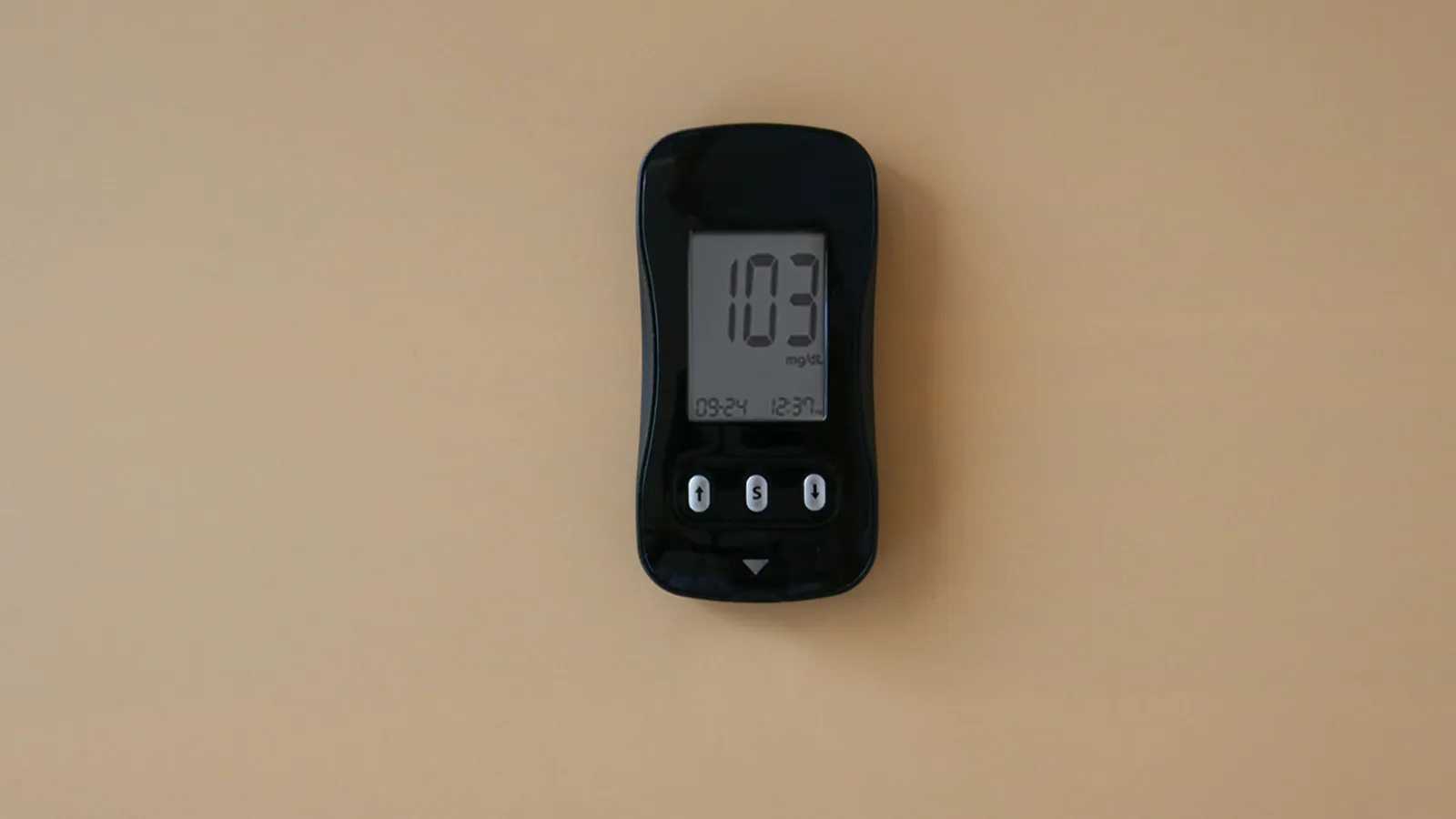
Type 2 diabetes doesn’t appear overnight. For years, the body sends measurable signals that glucose is drifting out of range, long before any disease exists. That in-between zone is called prediabetes, and in Mexico it is enormous: according to ENSANUT 2022, Mexico’s national health and nutrition survey, 22.1% of adults live with prediabetes and 18.3% already live with diabetes. The worrying part is that nearly a third of the people who have diabetes (31.7%) don’t know it yet.
The good news is that prediabetes can be detected with two simple, widely available blood tests: fasting glucose and glycated hemoglobin (HbA1c). Here we explain what each one measures, which numbers to watch and what the evidence says about getting back in range.
What is fasting glucose and what is a normal level?
Fasting glucose is the amount of sugar in your blood after at least 8 hours without eating, and a normal value is below 100 mg/dL, according to the American Diabetes Association (ADA, Standards of Care in Diabetes 2025) and Mexico’s official standard NOM-015-SSA2-2010.
It is a snapshot of a single moment: it tells you where your glucose stood that morning. When you haven’t eaten all night, your pancreas and liver should keep glucose stable within a narrow range. If the number comes back high even after fasting, that regulation system is already struggling, almost always because cells are responding less and less to insulin, the phenomenon known as insulin resistance.
What is HbA1c and why does it matter so much?
HbA1c (glycated hemoglobin) reflects your average glucose over the past 2 to 3 months, and a normal value is below 5.7%, according to the ADA (2025). Unlike fasting glucose, it doesn’t depend on what you had for dinner last night or whether you slept badly: it is the whole movie, not the snapshot.
The mechanism is easy to understand. Glucose circulating in the blood gradually sticks to the hemoglobin in red blood cells. Because a red blood cell lives about 3 months, measuring what percentage of hemoglobin has glucose attached reveals how much sugar there was on average over that period. To give you an idea, an HbA1c of 5.7% corresponds to an average glucose of about 117 mg/dL, and one of 6.5% corresponds to about 140 mg/dL (ADA, estimated average glucose calculation, Nathan and colleagues, 2008).
One detail worth knowing: conditions that affect red blood cells, such as anemia, can distort the HbA1c result. That is why the two tests complement each other and are best read together.
Which numbers indicate prediabetes?
You have prediabetes when your fasting glucose is between 100 and 125 mg/dL, or your HbA1c is between 5.7% and 6.4%, according to the ADA criteria (2025). Mexico’s NOM-015-SSA2-2010 uses the same range of 100 to 125 mg/dL and calls it “abnormal fasting glucose.” The World Health Organization is slightly more conservative and sets impaired fasting glucose at 110 mg/dL and above.
The full thresholds look like this:
| Indicator | Normal | Prediabetes | Diabetes |
|---|---|---|---|
| Fasting glucose | below 100 mg/dL | 100 to 125 mg/dL | 126 mg/dL or more |
| HbA1c | below 5.7% | 5.7% to 6.4% | 6.5% or more |
| Glucose 2 h after an oral glucose load | below 140 mg/dL | 140 to 199 mg/dL | 200 mg/dL or more |
Source: ADA, Standards of Care in Diabetes 2025; NOM-015-SSA2-2010.
An important point: a single abnormal result confirms nothing. Both the ADA and NOM-015-SSA2-2010 call for confirmation with a second test on a different day before a physician makes a diagnosis. If your result falls in the prediabetes range or higher, the next step is to repeat the measurement and take it to your doctor.
How common is prediabetes in Mexico?
More than 1 in 5 Mexican adults has prediabetes: 22.1% according to ENSANUT 2022, published in Salud Pública de México (2023). The same survey found 12.6% of adults with previously diagnosed diabetes and an additional 5.8% with diabetes they did not know they had. Combined, 18.3% of the adult population lives with diabetes.
Mexico is among the ten countries with the most adults living with diabetes in the world, according to the International Diabetes Federation’s Diabetes Atlas (2025), and these numbers explain why waiting for symptoms is a poor strategy: prediabetes doesn’t hurt, doesn’t show in the mirror and almost never gives a warning. The only way to catch it in time is to measure.
Can prediabetes be reversed?
Yes, and the evidence is strong: in the Diabetes Prevention Program study (published in the New England Journal of Medicine, 2002), people with prediabetes who lost about 7% of their body weight and accumulated 150 minutes of physical activity per week reduced their likelihood of developing type 2 diabetes by 58%, over a follow-up of almost 3 years.
That number is worth pausing on. It wasn’t a medication or an exotic intervention: it was walking consistently and losing a few kilos, with structured support. For a person who weighs 85 kg, that 7% is about 6 kilos. The body responds quickly when muscle goes back to using glucose on a regular basis, because skeletal muscle is the main destination for the sugar circulating in your blood.
That is why body composition matters so much in this story: two people at the same weight can have very different risks depending on how much muscle and how much visceral fat each one has. Watching glucose without watching muscle is seeing half the movie.
How often should you get tested?
The ADA (2025) recommends starting screening in all adults at age 35, and earlier if there is overweight or obesity plus a risk factor, such as a family history of diabetes or high blood pressure. If the result is normal, repeat at least every 3 years; if there is prediabetes, test every year.
In practice, for most adults in Mexico it makes sense to learn these two numbers as soon as possible and follow them yearly, the same way you keep track of your weight or your blood pressure. They are common, affordable lab tests, and the information they give is worth its weight in gold: it lets you act while it is still early.
Know your numbers before they surprise you
At TechNSports we help you see the full picture. In a scan session we measure your body composition with 3D technology and InBody, and our biomarker panels include fasting glucose and HbA1c, with a plain-language explanation of what each number means and what you can do with that information. If you prefer to handle it on your own, we are happy to point you in the right direction too. Book your session at technsports.mx or write to us at info@technsports.mx.
This article is wellness education and does not constitute medical advice. TechNSports does not diagnose, prescribe or treat disease; the clinical interpretation of your results and any decision about your health belong to your treating physician. Sources cited: American Diabetes Association, Standards of Care in Diabetes 2025; NOM-015-SSA2-2010 (Secretaría de Salud, Mexico); ENSANUT 2022, Salud Pública de México 2023; Diabetes Prevention Program Research Group, New England Journal of Medicine 2002; World Health Organization; Nathan et al., Diabetes Care 2008; International Diabetes Federation (IDF), Diabetes Atlas, 11th edition, 2025.
Frequently asked questions
What is a normal fasting glucose level?
Below 100 mg/dL after at least 8 hours without eating, according to the American Diabetes Association (2025) and Mexico's NOM-015-SSA2-2010. From 100 to 125 mg/dL is the prediabetes range, and 126 mg/dL or more is the diabetes range.
What is the difference between fasting glucose and HbA1c?
Fasting glucose is a snapshot of a single moment: it tells you where your glucose stood that morning. HbA1c reflects your average glucose over the past 2 to 3 months. The two tests complement each other and are best read together.
Does one high glucose result mean I have diabetes?
No. A single abnormal result confirms nothing. Both the ADA and NOM-015-SSA2-2010 call for a second test on a different day before a physician makes a diagnosis. The next step is to repeat the measurement and take it to your doctor.
Can prediabetes be reversed?
The evidence is strong. In the Diabetes Prevention Program study (2002), people with prediabetes who lost about 7% of their body weight and accumulated 150 minutes of physical activity per week reduced their likelihood of developing type 2 diabetes by 58%.