3D body scan: what it is, what it measures and how accurate it is
TechNSports Team · · 7 min read
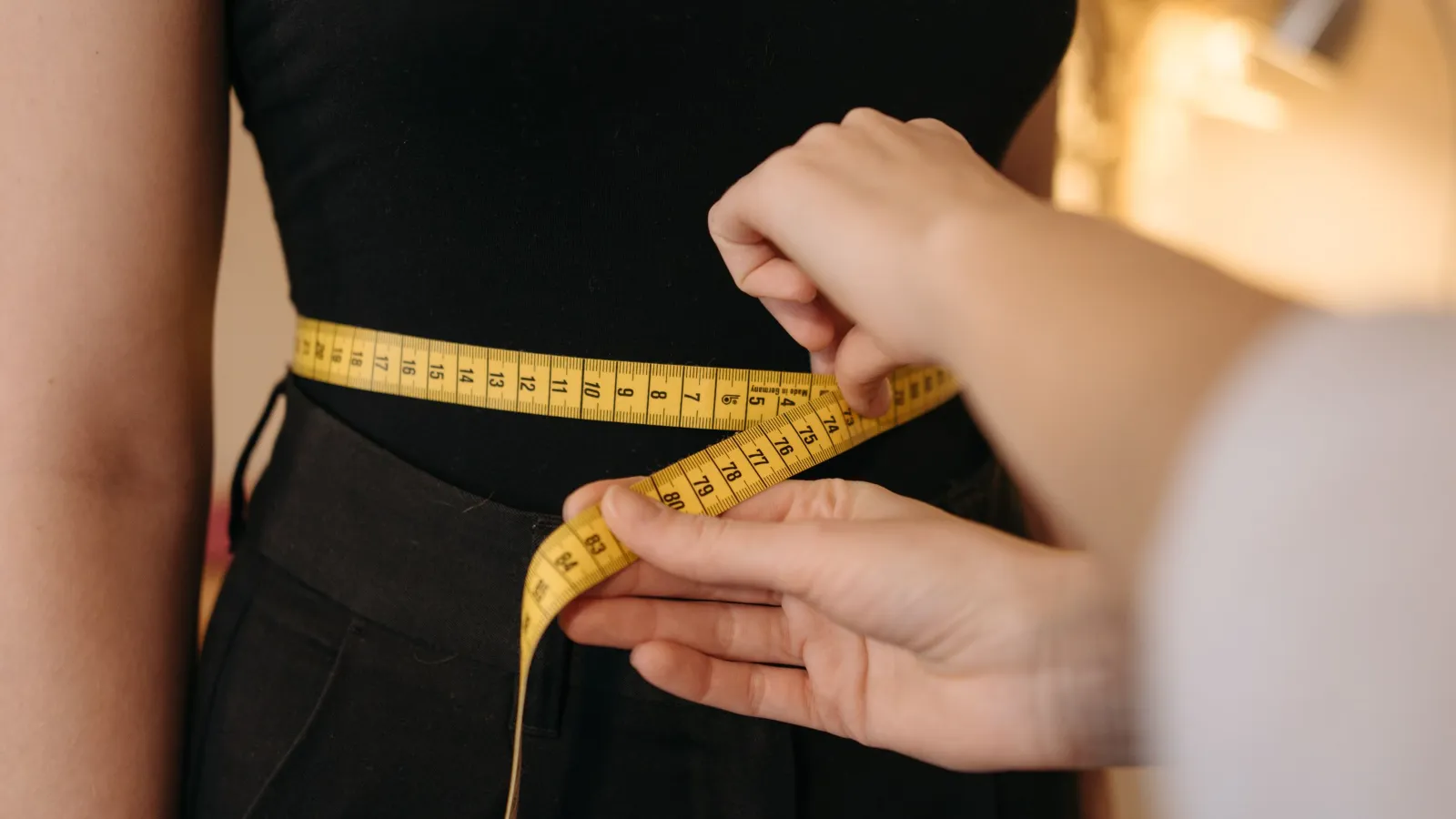
You measure your waist in the morning: 84 centimeters. Someone else measures it that night: 86. Did you gain two centimeters in a day, or did they just measure differently? That doubt is exactly what a 3D body scan tries to solve.
The short answer: a 3D scanner is a fast, highly repeatable way to measure the outline of your body, especially your waist, hips and thighs. Its body fat percentage is a useful estimate for tracking trends, with a margin of error of several points that is worth knowing.
What is a 3D body scan?
It is a measurement of your body’s surface taken with cameras or depth sensors, with no contact and no X-rays. You stand still in fitted clothing, the device captures your silhouette from several angles and builds a digital model of your body, a kind of avatar.
From that model, the software calculates measurements: circumferences of the neck, chest, waist, hips, arms and thighs, plus areas and volumes for each segment. Then, using statistical equations, it estimates how much fat and how much fat-free mass you have.
That second step is key. The scanner does not see fat inside your body: it infers it from your shape.
What does a 3D scanner measure well?
It measures what is visible very well: your outline. In the study by Ng and colleagues (European Journal of Clinical Nutrition, 2016), with 39 adults, the scanner’s waist reading matched the tape measure almost completely, with an R² of 0.95. R² runs from 0 to 1: the closer to 1, the more two measurements agree.
Where it really stands out is repeatability. Tinsley and colleagues (European Journal of Clinical Nutrition, 2020) scanned 179 people twice on four commercial scanners. Circumferences varied on average by 1.1 to 1.3 percent from one scan to the next. On an 85-centimeter waist, that is about 1 centimeter. Hips were the most stable measurement and arms the least.
Why isn’t a tape measure enough?
A tape measure does work and costs nothing, but it depends heavily on who measures and where. When 622 adults in the Netherlands measured their own waist, they overestimated it by 5.98 centimeters on average compared with a measurement taken by trained staff (Contardo Ayala and colleagues, BMC Medicine, 2014).
The exact spot also changes the number, and here the methods do not always agree. In Switzerland, Koepke and colleagues (PeerJ, 2017) found circumferences 1.17 to 4.37 centimeters larger on the scanner than with a tape. Depending on the method used, 4.1 to 7.3 percent of participants changed weight category. Ng (2016) attributed these differences to where each method places its landmarks.
The practical rule: do not mix methods. Compare tape with tape and scanner with scanner.
How accurate is a 3D scanner’s body fat percentage?
It works for trends, but it is less exact than circumferences. Tinsley and colleagues (Clinical Nutrition, 2020) compared four scanners against a four-compartment model, one of the most complete reference methods, in 171 people. Three of the four were equivalent on average. Even so, the typical error for an individual was 3.7 to 6.1 points of body fat percentage, depending on the brand.
In plain terms: if the scanner says you are 28 percent body fat, your true value could be several points higher or lower. For tracking your own progress on the same device, the number is useful. For comparing yourself with another person or another device, much less so.
Brand matters. In the same group’s other study, one scanner underestimated body volume by 10.1 liters and another overestimated it by 8.0 liters (Tinsley, 2020). Each manufacturer uses its own algorithm, and not every model has published independent studies.
Posture counts too. In a small study of 20 young adults (Balmores and colleagues, Clinical Nutrition ESPEN, 2026), pushing out or sucking in the belly moved the scanner’s waist reading from 79.6 to 76.3 centimeters and its body fat from 28.1 to 25.8 percent. Bioimpedance measured in the same postures did not change.
Can it track changes over time?
Yes, and that is probably its best use. Wong and colleagues (American Journal of Clinical Nutrition, 2023) followed 133 adults for 3 to 23 weeks and compared changes on the 3D scanner with changes on DEXA. For change in total fat, agreement was R² 0.86 in women, with a typical error of 1.98 kg, and 0.75 in men, with 2.31 kg.
A review of 123 studies with World Health Organization co-authors (Palumbo and colleagues, Obesity Reviews, 2025) placed 3D scanners among the methods with high or moderate validity against total body fat. The authors warn that the studies varied widely, so the numbers should be read with caution.
How does it compare with other methods?
| Method | What it measures directly | What it estimates | One data point from the evidence |
|---|---|---|---|
| Tape measure | One circumference | Nothing else | Self-measuring overestimated waist by 5.98 cm on average (Contardo Ayala, 2014) |
| 3D scan | Shape, circumferences and volumes | Fat and fat-free mass | Circumferences varied 1.1 to 1.3%; body fat typical error 3.7 to 6.1 points (Tinsley, 2020) |
| Bioimpedance | The body’s opposition to an imperceptible current | Water, muscle and fat | Repeatability of 0.98 or higher against itself (McLester, 2020) |
| DEXA | Tissue density using low-dose X-rays | Fat, muscle and bone by region | A common reference method in research |
What waist size counts as a risk in Mexico?
The Mexican standard NOM-015-SSA2-2010 uses an abdominal circumference above 80 cm in women or 90 cm in men as one of the risk factors for diabetes. With those cutoffs, ENSANUT 2022 found abdominal obesity in 81.0 percent of Mexican adults (Campos-Nonato and colleagues, Salud Pública de México, 2023).
Keep in mind: those values were defined with a tape measure at a specific spot, so a scanner waist reading does not compare one to one. A simple complementary indicator is the waist-to-height ratio.
What you can do starting today
- Measure your waist properly. Standing, relaxed and breathing normally, at the midpoint between your lowest rib and the top of your hip bone (WHO, 2011). Measure twice; if the readings differ by more than 1 cm, repeat.
- Write it down once a month, for example on the first Monday, at the same time and before breakfast, in a note on your phone.
- Always use the same method and, if you can, have the same person measure you.
- If you get a 3D scan, wear fitted clothing, stand relaxed without sucking in or pushing out your belly, and repeat it under similar conditions.
- Watch the trend over several months, not a single number.
Going deeper
Almost all scanners follow the same logic. First they rebuild a mesh of your surface. Then they turn it into a handful of numbers that summarize your shape, using a statistical body shape model. Finally they apply equations trained against DEXA or other methods to estimate fat and lean mass. Wong (2023) used this approach with a Fit3D scanner and a Hologic DEXA, in a retrospective analysis of 6 intervention studies.
Ng (2016) measured 39 healthy adults, selected by age, sex and body mass index, with a 3D scanner, DEXA, air displacement plethysmography and a tape measure. The equations were validated in 37 gym users. Visceral fat showed only moderate agreement with DEXA (R² of 0.75). Remember that visceral fat sits inside the abdomen, where no camera can reach.
Tinsley’s two studies (2020) evaluated FIT3D, Naked Labs, Size Stream and Styku in Texas. All showed proportional bias: the error changes with the person’s body size. No scanner volume was equivalent to the reference methods within a 5 percent margin.
The most important limit for us: these studies were done in the United States and Europe. We found no validation of 3D scanners in a Mexican population, and each brand uses its own equations, which it does not always publish.
How we measure it at TechNSports
At TechNSports we use a ShapeScale 3D scanner, which produces an avatar of your body, segment-by-segment circumferences and heat maps that show what changed from one session to the next. We pair it with a bioimpedance analysis (InBody in Mérida) to also see what the surface does not show. As with any scanner, we read the 3D body fat percentage as an estimate and give more weight to circumferences and the trend.
If you want to know your starting point, here is what a scan session looks like.
This content is wellness education and does not constitute medical advice. The information here does not replace guidance from a health professional, and a scan session at TechNSports is an informational measurement, not a medical evaluation. Sources cited: Ng BK and colleagues, European Journal of Clinical Nutrition, 2016; Tinsley GM and colleagues, European Journal of Clinical Nutrition, 2020; Tinsley GM and colleagues, Clinical Nutrition, 2020; Wong MC and colleagues, American Journal of Clinical Nutrition, 2023; Contardo Ayala AM and colleagues, BMC Medicine, 2014; Koepke N and colleagues, PeerJ, 2017; Balmores DM and colleagues, Clinical Nutrition ESPEN, 2026; Palumbo AM and colleagues, Obesity Reviews, 2025; McLester CN and colleagues, Journal of Clinical Densitometry, 2020; World Health Organization, 2011; Mexican Ministry of Health, NOM-015-SSA2-2010, 2010; Campos-Nonato I and colleagues, Salud Pública de México, 2023.
Frequently asked questions
What does a 3D body scan measure?
It measures the surface of your body and, from that digital model, calculates circumferences such as waist, hips and thighs, plus areas and volumes for each segment. Using statistical equations it estimates your fat and fat-free mass, but it infers that part from your shape; it does not see inside.
How accurate is a 3D body scanner?
Very repeatable for circumferences: in the study by Tinsley and colleagues (2020), they varied by 1.1 to 1.3 percent from one scan to the next. For body fat percentage it is less exact: the typical error against a reference method was 3.7 to 6.1 points, depending on the brand.
Is a 3D scan better than a tape measure?
A tape measure is free and useful if used well, but it depends on who measures and where. When adults measured their own waist, they overestimated it by 5.98 centimeters on average (Contardo Ayala, 2014). A scanner is more repeatable, but its values do not match tape values one to one: always compare with the same method.
How do I prepare for a 3D body scan?
Wear fitted clothing, stand relaxed and breathe normally, without sucking in or pushing out your belly. In a small study, changing abdominal posture moved the scanner's waist reading from 79.6 to 76.3 centimeters (Balmores, 2026). Repeat the scan under similar conditions each time.