Why BMI can mislead you: what a single number can't see
TechNSports Team · · 7 min read
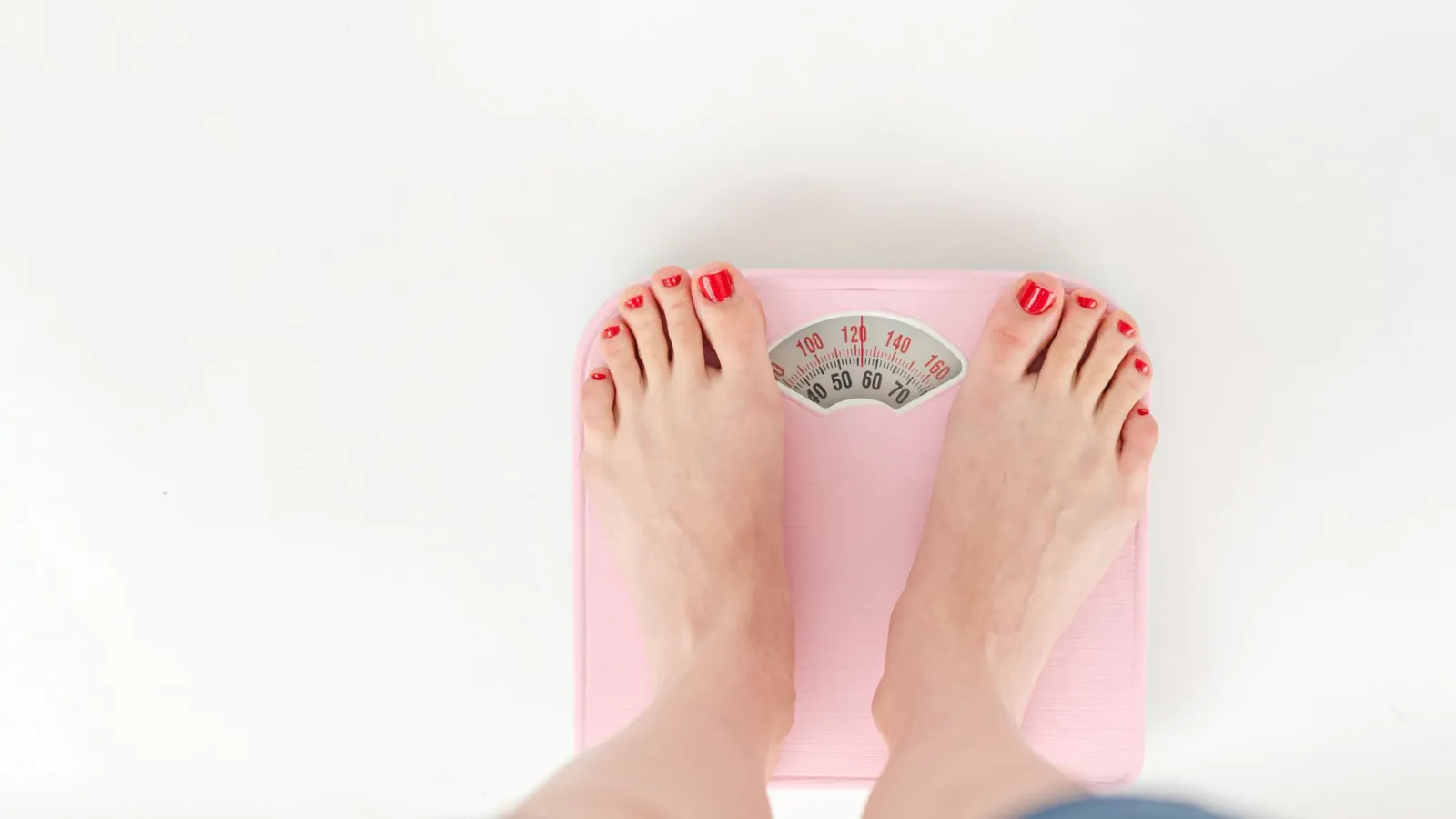
Body mass index, the number you get by dividing your weight by your height squared, is probably the most famous health measure in the world. It shows up in your medical record, on the charts at the gym and in almost any online calculator. It is cheap, fast and, for looking at entire populations, it works fairly well.
The problem starts when you use it to judge yourself, a single person. BMI takes two data points, weight and height, and tries to sum up your health with them. But your body is not just weight and height: it is muscle, bone, water and fat, distributed in very different ways. Understanding what BMI sees and what it misses is the difference between trusting a number and truly knowing how you are doing.
What exactly is BMI and what is it good for?
BMI is your weight in kilograms divided by your height in meters squared. The World Health Organization uses well-known cutoffs: below 18.5 is considered underweight, 18.5 to 24.9 normal weight, 25 and above overweight and 30 and above obesity.
For what it was designed to do, it is a useful tool. It was born as a statistical indicator for studying large groups, not individuals, and at that scale it delivers: it makes it possible to compare countries, follow trends and estimate how many people carry excess weight without having to scan millions of people. In Mexico that picture is stark. According to ENSANUT Continua 2020-2023, the national health and nutrition survey published by Mexico’s Instituto Nacional de Salud Pública, 74.5 percent of adults live with overweight or obesity, split almost evenly between 37.4 percent with overweight and 37.1 percent with obesity. As a snapshot of a country, BMI draws the size of the problem well.
Why does BMI mislead at the individual level?
Because it only knows your weight and your height, and with that it cannot distinguish two things that matter enormously: what that weight is made of and where it is stored. A kilo of muscle and a kilo of fat weigh the same on the scale, but they mean opposite things for your health. BMI adds them up without telling them apart.
The authors of A Body Shape Index, Krakauer and Krakauer, pointed this out clearly in their paper published in PLOS ONE in 2012: BMI does not separate fat from muscle or take into account how that fat is distributed in the body. That limitation produces two common errors.
The first is the muscular person. Someone who strength trains consistently can land in the overweight category according to the chart, when that extra weight is muscle and their real risk is low. The second, and quieter, is the person at a normal weight with too much fat. Their BMI comes out perfect, but they carry fat around the organs that the number never detects. In both cases BMI delivered a verdict, and in both it was wrong.
What measures risk better than BMI?
The shape of your body, more than its weight. When, instead of looking only at how much you weigh, you start looking at where you carry your fat, predictive power improves.
A Body Shape Index itself showed it: in Krakauer and Krakauer’s analysis (PLOS ONE, 2012), about 22 percent of the population’s mortality risk was associated with a wide-waisted body shape, compared with 15 percent attributable to BMI. Put simply, waist beat weight as a risk signal. The reason is physical: fat concentrated in the abdomen behaves very differently from fat spread across the arms and legs, and BMI is blind to that difference because it never asks about your waist.
Which measurements can you check today?
Two, and neither needs technology, just a tape measure. They are a better first filter than BMI because they do take your waist into account.
The first is waist circumference. Measure at the level of your navel, without pulling the tape tight, after a normal exhale. The International Diabetes Federation, with the cutoffs it recommends for the Latin American population, marks higher cardiometabolic risk starting at 90 centimeters in men and 80 centimeters in women (IDF, 2005). These are the figures the IDF says to use in this region until more specific data are available.
The second is your waist divided by your height. Measure both in the same units and divide. The rule, proposed by Ashwell and colleagues in BMC Medicine (2014), is easy to remember: your waist should measure less than half your height. The British NICE guideline, in its 2022 update, sorts it into three bands: 0.4 to 0.49 is a healthy range, 0.5 to 0.59 calls for attention, and 0.6 and above means it is time to act. What makes this measure interesting is that it works regardless of sex or height, and even in people with a lot of muscle, right where BMI fails most.
Where does the tape measure end and measurement begin?
A tape measure estimates your shape; a body composition analysis measures it. Waist against height gives you a valuable signal, but it does not tell you how much of that circumference is abdominal muscle, how much is fat under the skin and how much is deep fat around the organs. That is where an at-home reading reaches its limit.
With a body scan and a segment-by-segment analysis, what weight lumps together gets separated: how many kilos of muscle you have, how they are distributed and a specific estimate of your fat. Instead of one ambiguous number, you get a map of your body. Perhaps the most useful part appears when you repeat the measurement over time: when someone starts strength training and eating better, the scale and BMI sometimes barely move for weeks, because they are gaining muscle while losing fat. Without a measurement that separates the two, it is easy to give up right when the body is responding. With one, you see the real progress and keep the habit going.
What to remember
BMI is a good tool for looking at populations and a poor compass for judging yourself alone, because it ignores two decisive things: what your weight is made of and where you carry your fat. You can get a more honest reading today with a tape measure: check your waist against 90 centimeters for men and 80 for women, and confirm that it measures less than half your height. If you want to go from an estimate to really knowing how much muscle and how much fat you carry, and how they change over time, that is where a body composition measurement makes the difference.
At TechNSports, that is exactly what we do: we turn your body’s numbers into something clear, so you know where you stand and what to change, without depending on a single number that can mislead. If you’d like to know your body composition in depth, see what a body composition analysis in Mérida involves, and we’ll gladly book your scan session at Plaza 333, in Mérida.
This content is wellness education and does not constitute medical advice. TechNSports performs body composition measurements and point-in-time readings of physical indicators; it does not treat illness or replace the guidance of a health professional, whom you should see with any question about your particular case. Sources cited: World Health Organization, body mass index classification; Instituto Nacional de Salud Pública, ENSANUT Continua 2020-2023 (Salud Pública de México, 2024); Krakauer NY and Krakauer JC, A Body Shape Index, PLOS ONE, 2012; International Diabetes Federation (IDF), waist circumference criteria, 2005; Ashwell M et al., BMC Medicine, 2014; National Institute for Health and Care Excellence (NICE), overweight and obesity guideline, 2022 update.
Frequently asked questions
What is BMI and how is it calculated?
It is your weight in kilograms divided by your height in meters squared. The World Health Organization considers below 18.5 underweight, 18.5 to 24.9 normal weight, 25 and above overweight and 30 and above obesity.
Why is BMI not reliable for one individual?
Because it only knows your weight and your height. It can't distinguish what that weight is made of or where the fat is stored, so it can place a muscular person in the overweight category and give a perfect result to someone at a normal weight with too much fat.
Which measurements are a better first filter than BMI?
The ones that take your waist into account. Waist circumference marks higher cardiometabolic risk starting at 90 centimeters in men and 80 in women (IDF, 2005), and your waist should measure less than half your height.
What do the waist-to-height ranges mean?
According to the British NICE guideline, in its 2022 update, 0.4 to 0.49 is a healthy range, 0.5 to 0.59 calls for attention and 0.6 and above means it is time to act.